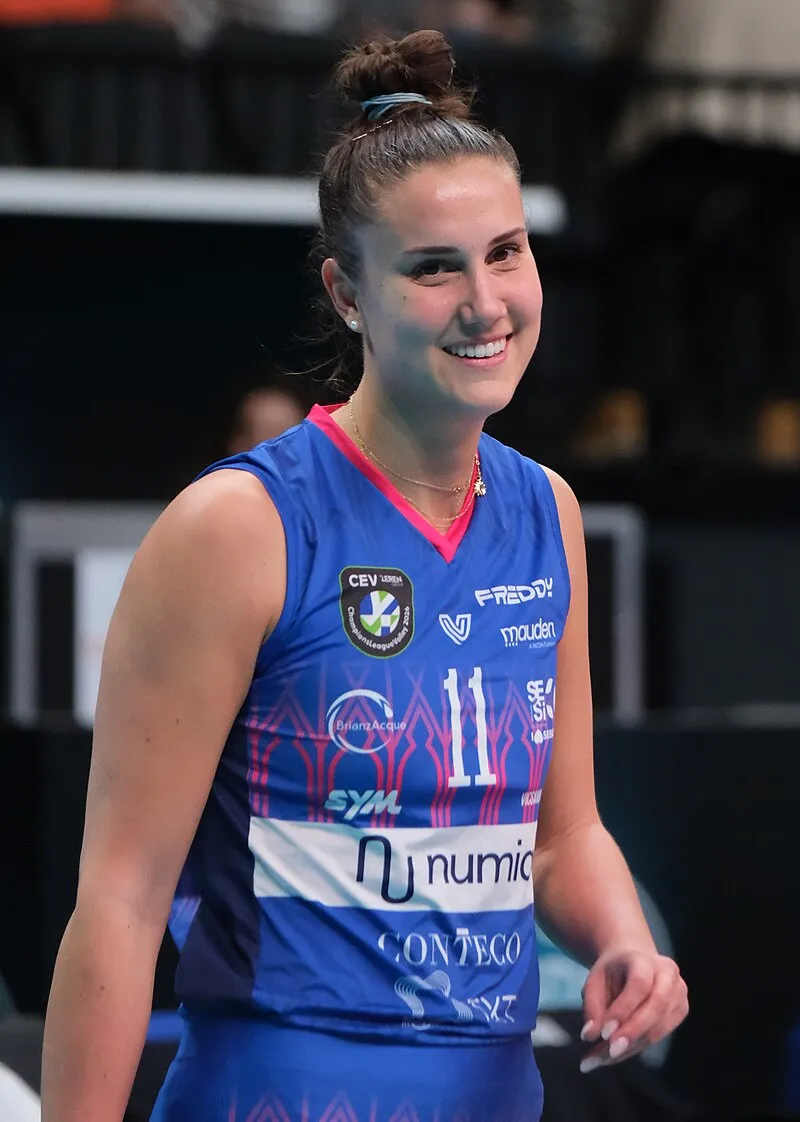
Melissa Vargas Net Worth 2026 - From Havana to Istanbul: How Dual Citizenship Unlocked a $6.5 Million Volleyball Fortune

Photo of Melissa Vargas, via Wikimedia Commons
Few financial narratives in professional volleyball are as instructive as the one belonging to Melissa Vargas. Born in Cuba and forged in that country's legendary state-sponsored athletic system, Vargas made a calculated move to Turkey that fundamentally rewired her earning potential. By 2026, her estimated net worth stands at approximately $6.5 million — a figure that reflects not just athletic brilliance, but a sophisticated understanding of how geography, citizenship, and market positioning intersect in professional sports.
The Cuban Foundation: Building Skills Without Building Wealth
Vargas emerged from Cuba's national volleyball pipeline as a teenager, demonstrating the kind of raw explosive power and technical precision that the Cuban system has historically produced in abundance. However, the economic structure of Cuban state sport meant that however gifted she was, the financial ceiling was institutionally constrained. Athletes operating within that framework received state stipends, housing, and training support — but the premium commercial contracts available to their peers in Europe and South America remained inaccessible.
Her early competitive record established her reputation. She was already being watched by European club scouts before she had turned 20, and the question was never whether she possessed the talent to compete at the highest levels of Turkish volleyball. The question was how and when the opportunity to do so would materialize.
The Turkish Pivot: A Career-Defining Financial Decision
Vargas's transition to Turkish volleyball — facilitated by her acquisition of Turkish citizenship — is the pivotal chapter in her financial story. Turkey's Sultans League is among the wealthiest women's volleyball competitions on the planet, with clubs like VakıfBank, Eczacıbaşı, and Fenerbahçe spending aggressively to recruit top international talent. Foreign players with proven international pedigrees command premium salaries that simply do not exist in most other national leagues.
 Photo: Fenerbahçe, via mir-s3-cdn-cf.behance.net
Her arrival in Turkey repositioned her from a talented prospect within a restricted system to a marquee foreign signing in one of Europe's richest leagues. Industry estimates suggest her annual club salary in the Sultans League has ranged between $800,000 and $1.2 million at peak contract value, placing her among the highest-paid women's volleyball players globally. Over the course of multiple contract cycles, club earnings alone account for an estimated $4.2 million of her total net worth.
National Team Bonuses: Two Flags, Two Revenue Streams
The dual-citizenship dimension of Vargas's career created a complex but financially significant national team earnings profile. Representing Turkey's national team at major FIVB competitions — including the Volleyball Nations League, European Championships, and World Championships — generates performance bonuses that supplement club income meaningfully.
Turkey's volleyball federation has invested heavily in its national program, and the bonus structures attached to deep tournament runs and podium finishes have added an estimated $350,000 to $500,000 in cumulative national team compensation to Vargas's earnings profile over her years of Turkish national team eligibility. These figures, while less dramatic than club contracts, represent consistent supplemental income that compounds meaningfully over a career.
Endorsements: The Commercial Dividend of Visibility
Visibility in Turkish volleyball translates into commercial opportunity at a scale that would be difficult to replicate in most other markets. Turkey's passionate volleyball fanbase, combined with the league's strong television presence and social media penetration, makes top players attractive partners for consumer brands.
Vargas has cultivated an endorsement portfolio that includes sportswear partnerships, nutritional supplement deals, and lifestyle brand collaborations. Estimates place her annual endorsement income in the range of $200,000 to $350,000, with cumulative endorsement earnings contributing approximately $1.1 million to her overall wealth profile. Her social media presence — particularly on Instagram, where she maintains a following that spans Turkish volleyball fans, Cuban diaspora communities, and international volleyball audiences — provides both organic reach and paid partnership opportunities.
Social Media and Digital Revenue
Vargas's cross-cultural identity gives her a uniquely broad digital audience. Her content resonates across multiple linguistic and cultural communities simultaneously, a demographic reality that brand partners find genuinely valuable. Sponsored posts, brand integrations, and platform monetization generate an estimated $80,000 to $120,000 annually, a figure that has grown steadily as her profile has risen in international volleyball circles.
Real Estate and Asset Accumulation
Like many high-earning European volleyball professionals, Vargas has directed a portion of her income toward property investment. Reports suggest she has made residential property investments in Turkey, a market that, despite currency volatility, has offered appreciating asset values in premium urban areas. These holdings are estimated to represent $400,000 to $600,000 in current asset value, providing a tangible store of wealth beyond liquid earnings.
The Broader Financial Picture
Melissa Vargas's estimated $6.5 million net worth in 2026 is the product of a career arc that most athletes never engineer with such deliberate precision. She identified the constraints of her original competitive environment, executed a citizenship transition that unlocked dramatically higher earning potential, and then performed at a level that justified every dollar of her premium market positioning.
For American volleyball fans accustomed to thinking about athlete wealth primarily through the lens of NCAA pathways and USA Volleyball contracts, the Vargas story offers a compelling alternative model — one where international market navigation and strategic citizenship decisions can produce financial outcomes that rival those of athletes in far higher-profile domestic sports markets.
Her story is, at its core, a masterclass in understanding that athletic talent is a raw material, and that the financial return on that talent depends enormously on where and how it is deployed.